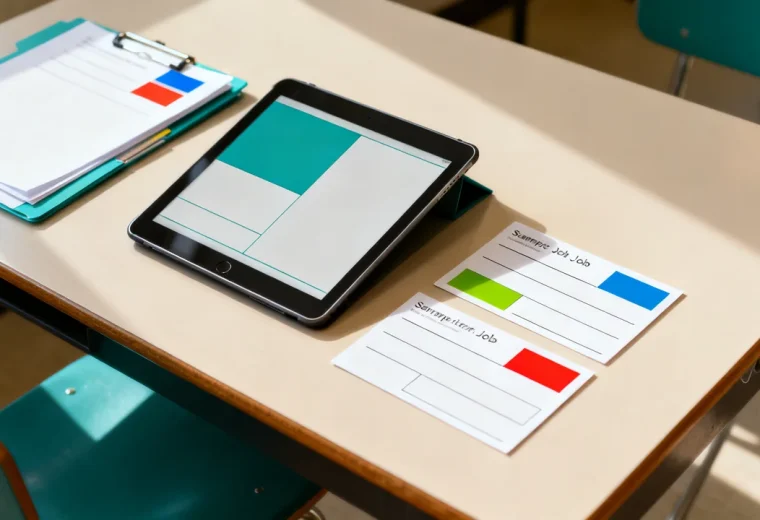
A customer acknowledgment records a response to particular information. It should not be presented as proof that every listed task was performed correctly, that the customer is satisfied or that future complaints are waived. A signature image, checkbox or recorded reply must be understood alongside the exact wording, version and circumstances of collection.
This guide addresses the operational record: what the customer saw, what response was received and how to preserve it without changing its meaning. It does not determine legal validity or enforceability. Contract terms, waivers and dispute decisions belong in the organization’s approved process with appropriate professional review.
Describe what the customer is being asked to acknowledge
Choose one clear purpose. Receipt of a work summary is different from approval of an added charge, acceptance of additional work or a satisfaction response. Do not combine those decisions in a vague “sign here” step.
Present the relevant work summary and any unresolved items before the response control. The customer may be able to confirm that they received a summary without being able to verify a hidden component or a technical measurement. Describe technician observations as technician observations; do not convert them into customer-certified facts.
Use plain, specific wording reviewed through the appropriate organizational process. Avoid promises such as “permanently fixed” or a blanket statement that all work is defect-free. If a different document is needed for a contract change, keep its purpose and approval path distinct rather than hiding it in routine closeout.
Preserve the exact material presented
The record should identify the job, the version of the summary, the response method and relevant timestamps. Keep the presented content with the response so that later edits to a work order do not silently change what a person appears to have acknowledged.
Where the software supports it, retain a snapshot or version identifier and an audit trail. Test the actual configuration: some systems show the current job contents beside an older signature. That display can be misleading unless the original version remains retrievable and clearly associated.
Distinguish the collection time on a device from the later server submission time, especially during offline use. Device clocks and time zones can differ. Record the available time information honestly rather than claiming that a timestamp alone establishes where or when an action occurred.
Make the mobile interaction understandable
Show the scope statement and summary in readable text, allow review before the response, and avoid preselected confirmation boxes. Do not hide qualifications below a signature pad or require a person to confirm a statement they dispute just to record a concern.
Provide a way to record comments, unresolved issues or a refusal to acknowledge. The technician should explain the request without calling it “just a formality.” Staff should not sign as the customer or imply that a customer reviewed something when only the technician completed the screen.
Test the form with enlarged text, the devices in use and an accessible alternative process. Technical support for a signature pad does not establish that the collection process is appropriate for every person or document.
Illustrative example: summary received, concern remains open
Consider an invented service visit where the technician’s summary states that a filter was replaced and a requested operational check was recorded. The customer says the room still feels warm. The closeout record should preserve the technician’s reported actions and the customer’s concern as separate attributed statements.
A proposed receipt acknowledgment might ask the customer to confirm that they received the identified work summary and had an opportunity to add a comment. That response does not certify the hidden installation, establish system performance or approve an extra charge. The exact wording should be reviewed for the organization’s use case before deployment.
If the customer adds “the room is still warm,” keep that comment with the response and create the appropriate follow-up task. Do not remove it to make the record appear complete. If the customer declines, record “not acknowledged” with a factual note about the interaction instead of substituting the technician’s signature.
This scenario is illustrative. It does not claim that a particular wording creates legal proof or that acknowledgment is required for every service visit.
Separate record types and their limits
| Record | What it can document operationally | What not to infer automatically |
|---|---|---|
| Receipt acknowledgment | A recorded response to an identified summary | Technical correctness, satisfaction or a waiver |
| Technician completion note | The technician’s account of actions and observations | The customer’s independent agreement |
| Change approval record | The recorded decision on an identified proposed change | Approval of a different version or unlimited future work |
| Customer survey | The response given to specific questions at that time | Proof of all work details or payment authorization |
| Photo or attachment | The captured material and its recorded association | A complete account of conditions outside the frame |
When another team uses the record, keep those limits visible. Reference the exact response and version rather than writing “the customer proved the job was correct.” Conflicting evidence or a disputed account should remain visible for the responsible reviewer.
Handle absence, alternatives and offline collection
If no customer is present, record the absence and the technician’s work summary. Send it through the approved communication route where appropriate. A sent message is not a customer acknowledgment, and a delivery indicator is not necessarily evidence that its contents were reviewed.
If the person cannot use the mobile form, offer the approved accessible alternative. Do not casually replace a signature with audio recording: recording may involve separate privacy, consent and organizational requirements. A technician note about a conversation should identify itself as that person’s account, not as a customer-signed record.
If offline collection is supported, test the complete presented text, response, comments and attachments in a sample job. Reconnect and verify their association with the same version. Do not clear local data or switch accounts while a response remains unsynced. Successful technical synchronization does not by itself settle legal validity.
Test retrieval and correction before release
- Retrieve the exact summary version linked to a sample response.
- Change the current job summary and confirm the older response does not appear to approve the new wording.
- Export the response, comments, version information and associated attachments through supported tools.
- Check user permissions and customer-facing visibility.
- Test refusal, absence, an accessible alternative and an offline sample.
- Correct an error with a traceable update rather than overwriting the original response.
Assign an owner for missing or disputed acknowledgments and keep the job’s work state separate from the response state. A completed task may still have an unresolved customer concern. Clear attribution and version preservation make the record more useful without overstating what it establishes.
Have a question or a correction?
Contact the editorial team